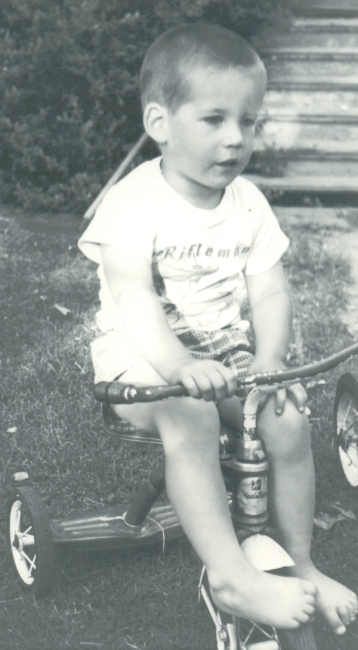
From Boom to Bust (Part 10/10)

This thread was only supposed to be a handful of posts but it turns out my life has been pretty complicated. As we get into my high school years the cans of worms that open up are too numerous for this thread, so I will unpack them in future threads. There will be a thread describing the awakening of my mind through reading philosophy, sci/fi and fantasy, which led to readings in mathematics and science, social psychology, and military history. There will be a thread on my involvement with music, how it saved my life and gave me an identity leading to endless opportunities. There will be yet another thread on how my alcoholism developed over a ten year period leading to a very hard bottom at the young age of twenty-three. Another thread will deal with my misbegotten relationship with an eighteen-year-old schoolmate that began when I was still sixteen, and how it contributed to my utterly disastrous early adulthood. And there will be a deep dive into my psychological problems, a many-headed hydra that still horrifies me. But for now, let me just tell a couple more stories and sketch out the logistics of how I emerged from childhood a member of Generation-X.

As the winner of the High Achievement music award I was given a scholarship to go to music camp. This was not a mountain retreat. It was held on the campus of a private university, hosted by the conservatory of music there. Kids came from all over the country. It was amazing. There was a junior music camp comprised of a pair of two-week sessions through the month of July, and a senior music camp that lasted the whole month, for older high school students. There was some kind of mix-up which, by the time the dust settled, resulted in my attending the month-long senior camp as a bassoonist. Many of my friends from junior high school were attending the junior camp, and I turned out to be the youngest student in the senior camp. There were sections for choir, band, orchestra, and a piano master class. As a budding pianist I was particularly in awe of the musicians in the piano master class who all seemed to be leagues ahead of me. One day I managed to find — unlocked — one of the practice rooms with a grand piano. I had recently purchased a copy of the Brahms piano sonata in F minor, so I settled down for a first run-through, sight reading, never having even heard it before. While I was still midway through the first movement there was a loud knock on the door. Oh no! I was not supposed to be using that piano as it was reserved for the master class students, and I was a mere bassoonist who had just turned fifteen. I sheepishly opened the door to see two of the guys from the master class. One had just finished high school and was going to attend UC Berkeley the following year. The other was from Las Cruces, New Mexico, who was about to start his senior year of high school. I had heard them both play: they were the best in the class. They together shouted, “Who are you?” I told them I was sorry to be using the room as I was just a lowly young bassoon player, and they replied, “Oh, no, you go ahead and keep playing. We were just wondering who it could be who had the chops to play the Brahms sonata so well. We know no one in the master class is playing it.” I told them I had just bought it and was trying to sight-read it. They were amazed to hear that, and told me I was going to have to hang out with them. After that they took me under their wings and at lunch they introduced me to the master class instructor, a world-famous concert pianist. I was euphoric. I ended up paling around with them all month, walking on a cloud. They told me, “Next year you have to sign up for the master class.” It turns out I did attend the master class two years later, but those details will have to wait for the music thread.

I was also embraced by some older orchestra musicians, one a brilliant violinist and pianist who later became a professional, another a clarinetist who was pretty obviously gay. One of their friends, an alumnus of the music camp who was now in college and also pretty queer, came to visit one day and the next thing I knew I was whizzing along in a car with them to go to a music store. It was strictly forbidden to leave campus except on supervised activities, so I was risking being sent home in shame if it were discovered, but I was too jazzed up by all the attention they were lavishing on me, telling me how talented I was and treating me like a king. The visitor and I got to talking about Rachmaninoff and being bisexual — it seemed a natural blend of subjects at the time. At the music store he bought me the score of Rachmaninoff’s Rhapsody on a Theme of Paganini and said, “You better know this by the next time I see you.” I have never quite mastered it, frankly. Perhaps I wasn’t as good as they thought, but my self-esteem was rocketing upward at the time. And yes, even then I understood that this was grooming behavior, but I didn’t care. They treated me respectfully and I didn’t feel in any danger. I don’t think there was any.

My high school years were dominated by music. I had jazz combo (on piano) before school, symphonic band (bassoon) and marching band (tuba) during school. At lunch time the jazz big band rehearsed (baritone sax). Last period I had music theory. After school I went to the voice teacher’s studio to accompany piano lessons (paid), and on Saturdays I taught piano lessons at the local music store. In the evenings in the fall we had marching band practice for the Friday night football games, and in the spring time we had musical theater orchestra for the big spring musical production. I was busy. But my brain having awakened, I was also taking all the college prep courses, including chemistry, physics, Spanish, psychology, creative writing, rhetoric, etc. I was one of the top students by now. One day my creative writing instructor, a hip/cool veteran of the Vietnam conflict, asked me to stay after class. He inquired about what I planned to do for a living after high school. I said, “I’m kind of thinking composition.” I meant becoming a composer of music. I dreamed of writing movie scores while I improvised on the piano for hours at a time. But he thought I meant English composition and said, “Hmm, I wouldn’t recommend that path for most people, but I think you could actually succeed at it.” He entered my name in a national creative writing competition, but I freaked out and never submitted anything. Awkward! Then my chemistry teacher took me aside and said, “You know, this is a thankless profession and I wouldn’t wish it on an enemy, but you have a special gift. That presentation you did in class reminded me of your father. You could be a great high school chemistry teacher!” The next year my physics instructor took me aside and said basically the same thing, but for physics: “That presentation you did on diodes had everyone hanging on every word!” Finally, my band director asked me to sit down in his office during my senior year (I had never even set foot in his office before!). He asked me about my plans for the future, and by then I was planning on attending the University of California at Santa Barbara for chemical engineering (long story, see girlfriend thread coming soon). He said, “Oh, I thought for sure it would be music. And I would say, don’t even waste time going to college for it. You should head straight down to LA and start doing studio sessions. You’re already better than half of those guys. You know everything you need to know to get started.” Man! I was flummoxed. Too many choices for this neuro-divergent to possibly process. So I went to UCSB because I wanted to learn to surf.

When my older brother, Dan, graduated, he went to live with my Dad. That left just three of us at home. I enjoyed having my little sister in band with me my senior year — she played clarinet. My little brother learned the drum set and played in a punk metal band when he got to high school. As my own graduation approached my mom decided it was time to sell the old Victorian house I had lived in since birth and move ten miles away to the university town where she worked. The escrow closed before the end of the school year and I had to commute the ten miles to finish the last two weeks before graduation. It’s all a blur, but it pretty much ruined the end of my senior year for me. I wasn’t able to celebrate with my friends properly. I never even picked up my diploma. The graduation ceremony was pretty cool, though. There were nearly five hundred students in my senior class. Normally the entire symphonic band would sit on the football field endlessly playing Pomp and Circumstance while the students filed through to get their diplomas. This was a bummer for the dozens of seniors in band who would have preferred to be with family and friends. This year the jazz combo volunteered to play instead. There were only six of us — piano, bass, drums, guitar, saxophone and trumpet — so that freed everyone else up. We played it straight: pomp and circumstance in all it’s regal solemnity. But after a few choruses we mixed it up, doing a blues version, then back to straight. We did a country version, a rock version, and a jazz version too. The crowd loved it!

By the time I was in college my younger brother and sister alternated years living with my dad and I was starting to lose track of where everyone was at any given time. The childhood home was a thing of the past and we were scattering into our adult lives. My older three siblings are all classic Baby-Boomers in their general outlook on life. But I became much closer to my younger siblings who came to define for me the attitudes of Gen-X. We were essentially latch-key kids, on our own for the most part through high school. We each had to carve out a life for ourselves with very little parental guidance or support entering adulthood. All six of us meandered through our twenties, working hard just to survive. We all turned out very different, but we all made it. The older we get, the more we appreciate each other.

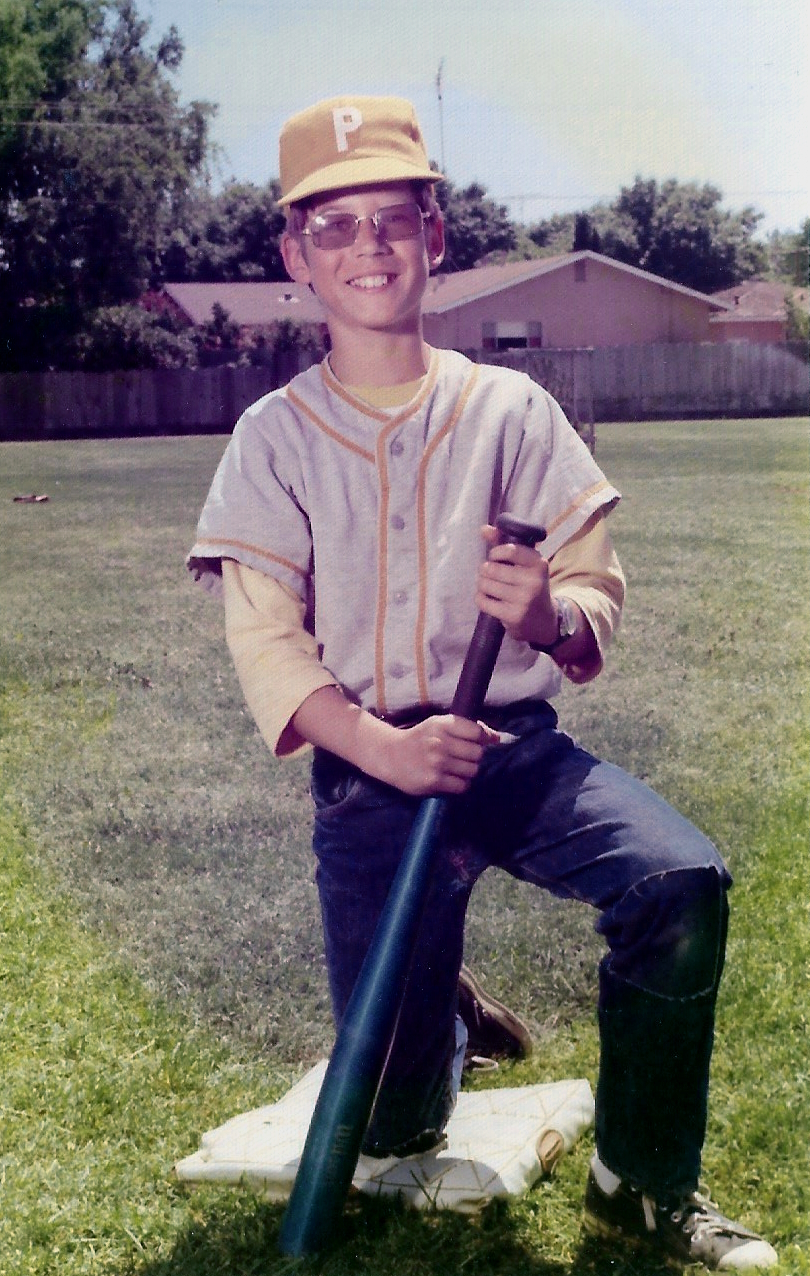
From Boom to Bust (Part 9)

My mom was a powerful woman. She was very intelligent, hardworking, and had a strong will. Her biggest failing, in my opinion, was that she was groomed from an early age to serve the patriarchy. She deeply believed that men should take the lead in things and that her role should be supportive. Yet she held the greater power in her relationship with Walt. It was her house. He needed her to help him write his sermons. She made the important decisions behind the scenes, and he must have resented his dependency. Although I never saw him hit her, she was cowed by his temper. He would call her “woman” in a derisive tone. I one time saw him grip her upper arm, hard enough to leave a bruise. There was a time she brought him toast that wasn’t burnt enough for his taste, and he tossed the whole plate back at her. But in the end she sent him packing. His sudden transformation to meekness and his apology to me, after two years of tyrannical domination, left me shell-shocked and confused. At least he was gone. We all felt a sense of relief and liberation in the aftermath.

Content Warning: discussions of suicide and dark insinuations.

My mom made some big mistakes raising us, but now she did something very right. She hauled the six of us into family counseling. Steve was a PhD psychologist and licensed family therapist, and he was great. I remember all of us sitting in a big circle in his office for several sessions, and as I recall it was a lot of fun. He had a calm and cheerful manner that got us all to loosen up and talk about our feelings. I remember there were these oblong pillow things with handles like swords that we could fence with. It was good times, and it wasn’t long before he said, “I think you all are doing quite well and you don’t need to keep coming back at this point. Except I want to continue to see Kirk.” Wow, I felt so special! I mean that in a positive way — I wanted to keep coming, and never thought about why I might be singled out in a negative sense.

So every week it seemed, for the next three or four years I went to see him. In 1974 most kids didn’t have a therapist, and I thought it made me cool. A year into it I bragged about it to my friends at school and they thought it made me a dark and complicated badass. They already thought I was a musical genius. When they asked me if it meant I was crazy, I said I would ask the therapist. He said, “No, you’re not ‘crazy!’ You’re not a raving basket case. I would would describe you as emotionally disturbed.” That satisfied my friends and me. Steve and I talked about my life history up to that point, trying to identify the turning points. I talked about the pants-down spankings, the way I felt singled-out by my father for extra punishments. I decided I must remind my dad too much of himself and so I got on his nerves. I talked about the Catholic school, the bullying. I talked about how Walt seemed to be a cross between Adolph Hitler and Barney Fife: an insecure loser who overcompensated by being a dictatorial douche. But mostly we talked about the bullying that was ongoing: the jocks at school who were always calling me “faggot,” “queer,” and “fairy,” pushing me in the hallways and punching me in the stomach. “What do they think they know about me?” I asked. “Are you gay?” he replied. And that started a long series of conversations about my sexual orientation. He was a good therapist. I never felt judged or in any way unsafe. I could have told him everything, but I withheld a lot. Maybe it was my age. Maybe it was the desperate need to convince myself that the bullies were wrong about me. I think if I believed that everyone could see who I really was and what had happened to me, if I thought I had failed in my attempts to keep the truth veiled, I would actually have killed myself. So eventually we succeeded in getting me through high school in one piece, but the deepest darkest stuff remained buried.

My sister, Karen, started working as a waitress in a small family-owned Mexican restaurant when she was sixteen. She spent a lot of time at work because she loved it. The other reason was because, due to her good looks and outgoing personality, her two best friends happened to be the richest in town. We were dirt poor, and she needed her own money to fit in, at least in a fashion sense. The owners of the restaurant were wonderful people, very kind, and she was a gifted waitress. One day, a few weeks after Walt left, I came home from school hungry. I looked in the pantry for something to eat and we were out of everything but pancake mix and such. I said, “Mom, there’s nothing to eat!” She was sitting at the kitchen table and, for only the second time in my life, I saw her bury her face in her palms and sob. “I’m so sorry, we don’t have any money. We may have to go on Welfare.” That very moment my sister walked in, home from work, and said, “What’s going on?” My mom seemed so ashamed as she explained the situation. Karen said, “Mom, I’ll loan you $75 so you can get some groceries, and I’ll ask at work to see if we can get you a job.” So for a while my mom bussed tables while my sister waitressed. It must have been a hoot. It wasn’t long before my mom got a part-time job lecturing at the university, and a year later she landed a great position at a community health research clinic as “Director of Intervention” in a multi-year, nationwide study. Like I said, my mom was a powerful woman! Her boss was an internationally-renowned epidemiologist, a Persian MD who got all the credit while she worked herself to the bone cleaning up the messes he created with his imperious arrogance. He was not good with people, but she was. She spent the rest of her career there, working fourteen-hour days to make that place a success. He eventually lost a class action lawsuit for harassment brought by all the other employees. She was probably his chief enabler. But at least we had enough money to get a stereo system, a microwave oven, a new car, and a color TV with cable. We were finally middle class.

Halfway through my ninth-grade year the bullying was getting to be too much. My last period of the day was Physical Education. Whenever PE ended, school was out, and I often found myself face to face with my tormentors. Billy, in particular, was not the scariest, but he was the most persistent. The scion of a very wealthy family, he seemed to take special delight in saying things like, “Kirk, you’re a ‘fairy’ nice guy!” One day he said to me, “You’re such a queer,” and I replied without missing a beat, “You wish!” There did always seem to be a sense of yearning in his pretty blue eyes, so I was calling him out! He responded by physically assaulting me with punches and kicks. I managed to escape and headed toward the band room — a standalone building not far away where my friends and I met up every day after school. That was the very last time I attended PE in junior high! After that I skipped PE and meandered my way over to the band room during seventh period. The band director was a sweet man and never questioned my presence there. I would greet my friends when they arrived after school as if nothing irregular was going on. My sister Karen was off at college now, and I had moved into her old room at the front of the house. My siblings were relieved when I moved the piano into it. They were annoyed at how much I practiced, and this made it less intrusive.

Since my mom was working so much, we younger four were pretty much on our own most of the time. My older brother, Dan, had a motorcycle and a job as a dishwasher at a restaurant on the edge of town. He was gone hanging out with his druggie friends much of the time, and that left me with my sister, Jenifer (two years younger) and my brother, Drew (four years younger). We took turns making dinner, which we would warm up for my mom when she dragged herself in at eight or nine o-clock. She would eat and then promptly fall asleep on the couch while we watched TV. By ten someone would run her bath water, then we would herd her off to the tub. We took turns waking her up, helping her out of the tub, drying her off and getting her moving towards bed. This is how we lived. After a few weeks of skipping PE, I started skipping school entirely. I would get up as normal, make my lunch and load it into my backpack with my books, then head out towards school. I found if I walked halfway to school before turning around to go back home it allowed just the right amount of time for my mom to leave for work. I would sneak back into the house and play the piano all day, talking to the composer Beethoven, whose spirit I imagined sitting at my side, coaching me and discussing his music. He was as weird as me, and we vibed together as I developed a special affinity for his piano sonatas. These were the happiest weeks of my life up to then. It was so nice not to have to deal with school anymore.

One Saturday afternoon my mom was reading the mail and she said, “What is this?” I looked at the letter she handed me. It was from the Department of Juvenile Justice. It said something to the effect of “Your son, Kirk, has been declared a habitual truant and will be made a ward of the court if you don’t respond by” such and such a date. Ooops. She looked at me in pained confusion. “But I see you leave for school every morning before I go to work!” Well, actually. I asked what “ward of the court” meant. She said, “They’ll take you away and put you in foster care, probably a group home somewhere.” What, no more private room with a piano?! This was a crisis indeed. “I’ll call Steve,” she said. I still can’t believe how people rallied on my behalf. I’m so lucky. Steve said he was willing to sign a release to get me out of PE for the rest of the year, and the school counselor told me the principal said they would only accept it because Steve was a doctor of psychology. The only caveat was that I would have to take one more semester of PE before I could graduate from high school in three years. Whew! And the band director said he was perfectly happy to have me as a student aide last period for the rest of the year. I couldn’t believe it, I was getting everything I wanted. But they said I had to sign a written contract, which I was to draft myself. So I wrote up a contract saying I would attend every class until the end of the year on the condition that I didn’t have to set foot in the gym again, and if I had even so much as one unexcused absence I would immediately be made a ward of the court. “Wow, that’s pretty draconian,” Steve commented, “Don’t you want to give yourself three strikes or something?” I straightened my back and said, “I don’t see any reason why I would have any unexcused absences.” So we both signed it. I discovered that merely by showing up to all my classes every day I could easily get straight A’s, and at the end of the year I was even presented the “High Achievement in Music” award in front of the whole school. To this day I still believe that if I had gone into foster care I would have died of a heroin overdose or suicide before the age of twenty. Thank you, Steve, you are still a hero to me!

From Boom to Bust (Part 8)

The last installment ended with a teaser about the next two years, and there will be a lot more detail and analysis in future posts. For the purposes of this thread, going from barely being a baby-boomer to fully joining Generation-X, I will start with a snapshot of how the two years ended. One August day I was sitting at the playroom table playing with the chess set. I think I had just finished a game with one of my brothers (“almost fifty-years-ago” is a long time to remember tiny details). I heard some commotion as people moved through the house from room to room. This big old Victorian house had a lot of rooms and most of them (all but two) had doors connecting them to multiple other rooms. For example, the “girls bedroom” had four doors, one leading to the middle living room, another to the dining room, another to the adjacent bedroom, and the fourth leading to the master bathroom. The playroom opened to two different bedrooms, the dining room, the laundry room, and the back bathroom. There were any number of potential paths through the house! I heard voices and footsteps making their way on one such path, people talking, more footsteps. Something was off, but I was locked into the fascination of what I was doing and was suppressing my growing sense of unease. Walt emerged from the boys bedroom and stood over me, my mom, sister and brother trailing behind. I looked up, flinching a little in preparation for whatever might be coming, but was shocked to see tears staining his face. I had never seen him like this — he had become a completely different person yet again. He seemed smaller, cowed like a contrite child. And then he did the weirdest thing: he stuck out his hand for me to shake, which I did, and through his tears he said, “I’m sorry.” As he walked away, someone whispered to me, “He’s leaving.” Mom had finally stood up and told him it was over.

Content Warning: This post contains a graphic depiction of domestic violence.

Victor Frankl in his book, “Man’s Search for Meaning,” describes the reaction of the prisoners when the Allies unlocked the gates of the concentration camp in which he was interred. They wandered out the gate into the forest, looked around a bit, then went back to their barracks. They couldn’t yet process the reality of the liberation they thought would never come. I was similarly in shock. In fact, all of us kids were showing clear signs of trauma, which had led my dad to ask his lawyer about beginning a custody challenge. But my mom had already begun to take control of the situation. To give Walt time to leave and to allow us to decompress, we were sent to spend a week at my dad’s. My eldest sister, who had previously gone to live with him, was now eighteen and a militant lesbian. She came at my mom’s request to stay with her in the interim, lest Walt return to cause trouble. It was decades later when I learned from her that she had borrowed a gun from a friend, just in case. So the consensus seems to be that the situation had become pretty scary.

On a lighter note, I want to tell you how my infatuation for baseball ended the previous year. There were three levels of little league: majors, minors, and California league, in order of skill level. My first year I was in California league (my team’s name was “Bakersfield”), but in my second year I was good enough to be on a minor league team, the Padres. So I guess we can say I was an intermediate player. I usually played right field or second base, although I do remember subbing at third base on occasion. I was once shocked by the speed of a line drive that came right up the third-base line. I caught it, but boy did my palm burn from the impact! I decided I preferred second base. Anyway, we were a pretty good team that year. Our hitting and fielding were strong, but our pitcher…he was the head coach’s grandson and had a love for baseball that exceeded his talent. He was a real pitcher: he could throw fastballs, change-ups, curves, and sliders. The one thing he couldn’t do was throw the ball over the plate. Every single inning it seemed the bases were loaded with runners who had been “walked.” If only we could find a way to get our other players into the game! So one day at practice, in despair, the coach let each player on the team take a turn at pitching. I had no idea about fancy aerodynamic techniques that required putting spin on the ball, but I could throw hard, fast, and straight. All those hours throwing balls against the back steps finally paid off, I guess. So I became the new pitcher! I met someone later who remembered playing against me, and he said, “Oh, I remember you! I loved coming up to bat against you, because you would throw it straight over the plate. I could always hit it!” At least I wasn’t walking people. And when they did hit my pitches, which was often, it created a chance for the rest of the team to deploy their skills, which were very good — so good that we found ourselves in the championship game at the end of the season! Sadly, it all ended in a Charlie Brown moment when I had to be pulled out during the game because for some mysterious reason I just couldn’t throw straight and we ended up losing the game. It was weird. Only later did it occur to me that playing for hours the previous day in a neighbor’s swimming pool was the cause. It was something we all knew not to do the day before a game, but I had forgotten all about it! It’s so sad to think that I was on the verge of being a hero, and wound up being the goat. After that I aged out of little league and was not good enough to continue to the next level. But by that time I was discovering my musical talent, which changed everything.

During the two years of my mom’s marriage to Walt our world was sharply bifurcated into two irreconcilable realms. My dad had become a laid-back, west coast, “enlightened” male. (The pants-down spankings had ended when he moved up to Washington for grad school.) He and his wife didn’t have a television, but did have a nice stereo and a collection of classical, folk, and jazz albums that we could listen to around the fire. I remember him smiling through his beard as he put on his apron to cook his classic eggplant stew, a recipe he found in Sunset Magazine. During the summer we would walk through a redwood grove to get to the edge of the Russian River a quarter mile away from their house, hanging out on a patch of sand where the little creek fed into the river. Directly across from us was a famous nude beach where dozens of naked hipsters would peacefully relax to the sound of bongos or guitars, the smell of weed often wafting in the air. My dad, stepmom, and sister would routinely skinny dip too, and we younger kids who didn’t live there all the time were free to join in if we wished. Family nudity in that setting never seemed awkward or uncomfortable to me, but it would have been unthinkable in the context of the rest of the extended family. The tone at my mom’s house was utterly different. Walt was a bit of a country bumpkin. He had no taste or sophistication of any kind. Whereas my dad would play the ukulele and sing Woody Guthrie songs, Walt could perform only one song: “How Great Thou Art,” a plodding, cringey, hymn. Whereas my dad could entertain a large audience to thunderous applause, whenever Walt performed his song people winced, either from the forced baritone of his untrained voice, or from the forced emotional display of his performative Christian faith. Because let me tell you: in spite of being a minister, that man was a spiritual pygmy. (Oops, no offense to actual pygmies, who no doubt possess authentic indigenous spirituality.)

One of the many things I used to love about professional baseball was the singing of the National Anthem before the game, with all the pomp and ceremony. Back in those days the solo was not a performance, per se, but was for the purpose of leading the crowd in singing. That seems to have been long forgotten, as now-a-days pop stars often butcher it in a way that leaves the audience out. I loved singing along. The cultural divide between the two households can be seen in how my two father figures differed on their assessment of the suitability of The Star Spangled Banner as a national anthem. For Walt it was a sacred hymn, and to besmirch it would be equivalent to flag-burning or blasphemy. But my dad had a more nuanced view. He pointed out that the verses of the poem were damn-near unintelligible, and if one did do the work to parse them out, the meaning was mostly militaristic. Plus, it was set to the tune of an old drinking song that required a range of a full octave and a half, something only trained singers can handle well, and then only when it’s “in their key.” America the Beautiful, on the other hand, is a lovely yet sing-able melody with words that warm the heart with vivid images of the natural assets of our land. There was no comparison: the latter should really be the national anthem.

One day, when I was twelve, Walt was watching the beginning of a baseball game on TV and I stupidly decided to articulate my dad’s position on the question of the two songs right in the middle of the singing of the anthem. Bad timing, I guess, but it also poked at the heart of a war that had been quietly raging between them for influence over my soul. It seemed I might be choosing sides. Walt became very angry that I would have the audacity to question the unquestionable nobility of our sacred national song, and voices were raised as we argued back and forth. I finally blew up and shouted at the top of my lungs, “I HATE the national anthem!!!!” and ran from the front living room all the way through the middle living room, dining room, and girls bedroom to finally arrive at the boys room. I slammed the door behind me and threw myself on the bed, sobbing.

In fact I did not hate the National Anthem. I loved it dearly and I dreamed of being able to lead the crowd at a baseball game in the singing of it myself one day. (It so happens that I have, many times, as lead in a barbershop quartet, but I digress.) But that’s not really what any of this is about. This is about the war between “The United States” and “America,” between Pepsi and Coke, between Jazz and “Country” music, Blue and Red, my safe cool dad versus this toxic troglodyte in a tractor hat. Boom, boom, boom, boom, I heard heavy footsteps on the wood floors coming towards my room. The door burst open and he pounced, slapping and punching me about the head and shoulders. I tried to shield my head with my arms, so he pulled them down to my sides and straddled me to keep them pinned as he continued his assault. This was the most uncontrolled rage I had ever witnessed from him, and that is saying something. Of course, the whole family arrived right behind him. I remember my older sister, Karen, shouting, “get the hell off him, you asshole!” and my two brothers actually trying to pull him off. As usual, my mom stood there, helpless in the moment. But as I described at the beginning, she was ultimately able to get him out, and thus began our next chapter.

Me at eleven.

From Boom to Bust (Part 7)

From the ages of nine to twelve baseball played an increasingly important role in my life. I was certainly not great at it, but I spent many hours playing catch, three-flies-up, and throwing a tennis ball against the back steps to hustle for the rebound. I adored my mitt like a favorite pet. I would oil it carefully, massage it, and rub it against my face to revel in the leathery smell. I loved the sound of a baseball smacking into the pocket. The game of baseball is very structural: the time and space relationships, the way the various positions must coordinate to move the ball around the diamond, the partition of blocks of time into innings, the count of balls, strikes, and outs. I was fascinated by the relatively narrow space between pitcher and catcher, standing ready to intercept the ball with my bat if only I could read the speed and trajectory correctly. I loved the uniforms. I spent many hours attempting to draw pictures of myself in major league uniform. My art skills were limited, but I used pastel crayons to try to get the colors just right. I was obsessed with the Oakland A’s professional baseball team, who were heading towards three consecutive wins in the World Series.

My dad was not really into sports at that time and I only remember playing catch with him on a few occasions. But my mom’s new boyfriend and his son were very avid about baseball. Walt coached a little league team in the nearby town where they lived, and I think they won their league. Blaine, his nine-year-old son, was a gifted player. As we began to spend more time together, he and I (a year older) became inseparable. We played baseball, rode bikes, and got into the various kinds of trouble together to which boys that age are prone. We were buddies, and I ended up spending a lot more time with him than my two brothers. If I was ten, then my mom would have been forty, and Walt was in his fifties.

Here’s what I came to know about Walt’s biography. My mom met him in Al-Anon, as his second wife was an alcoholic. I’m not sure if she died or was just institutionalized, but it was unusual in 1971 for a man to be a single father. Actually, Walt had several children from his first marriage, which ended in divorce when he “took up with the town barfly,” according to my mom. He had been the pastor of a small Methodist church in a mountain town, and the scandal led to his “defrocking.” Everything I am telling you is what I heard from my mother, so I don’t know any other facts. Anyway, he was now teaching sixth grade P.E. at yet another small town to the west of us. Originally from rural Pennsylvania, Walt grew up on a farm in a large family, abandoned by his alcoholic father for the most part, except when he would swing by the farm and cause a ruckus. My mom said Walt’s dad was physically brutal, but Walt was very attached to him. Walt’s “glory days” were during the Second World War, where he served as a corporal in Patton’s Third Army. General Patton was his hero. And everything I am telling you is sprinkled with “red flags,” isn’t it?

Walt and Mom dated through my fifth-grade year, and things were actually really nice. He was teaching me baseball. One of the greatest things I ever experienced was piling into the car and going down to Oakland to see the A’s play in real life. We also took a trip to Disneyland! I was really looking forward to their wedding in the summer of 1972. But he and Blaine had their little quirks. Blaine seemed to have no conscience or empathy of any kind. Whenever he got in trouble he lied his way out of it with ease. Adults were like cartoon characters to him: if they got mad about something, he just laughed at them. He never seemed to feel guilty about anything! I was the opposite. One time we were visiting them at their small apartment and Walt was sitting at the table playing solitaire as Blaine and I watched. Walt smoked a pipe regularly and had chronic post-nasal drip that caused him to sniff frequently. He wore dentures, so he made frequent mouth noises whenever he was thinking, as if he were trying to get them into the right position. His balding head was glistening with sweat and he adjusted his horn-rimmed glasses repeatedly as he concentrated on the game, which Blaine and I were following closely. With nervous little flutters of his fingers, he would surreptitiously re-order the hidden cards whenever he ran out of moves. “You’re cheating!” Blaine chided. We both laughed as he did it again. “I’m not cheating!” he replied, bristling at the accusation. He did it again. Blaine and I were giggling, because his cheating was so obvious yet the way he went about it was so sneaky it seemed he actually thought he was getting away with something. He refused to cop to it and seemed to resent us trying to call him out.

So 1972 was a bit of a magical summer. As the wedding approached I felt euphoric at the prospect of being his step-son, and Blaine and I were going to be step-brothers! The wedding was held at the Protestant church we had been attending for the past year. A note about that: my little sister Jenny cried one Sunday morning, saying, “I don’t want to go the laughing church!” her voice trailing off into a whining sob. She cried and whined a lot in those days, and we teased her for it. But she had a point. We had grown up going to the Catholic Church for Mass every Sunday morning. To us it was The Church. Every non-Catholic church was a fake church. Real priests never married. At the Protestant church the minister had a wife and children. Fake priest! Fake Communion! Fake church! And whereas at the Catholic Church the congregation maintained the proper decorum of somber penitence, when the UCC minister would tell a funny story in his sermon, the people would laugh out loud like it was a comedy club. We kids were mortified by the sacrilege of it all. But we eventually got used to it, and even learned to enjoy the more relaxed and friendly atmosphere. The people there were really nice, actually. After the joyous nuptials, my mother and her fancy new hair-do headed off with Walt for a three-night honeymoon at a tacky motel a few miles away.

While they were gone my sister Karen, sixteen, was in charge. We did fine, although the house got a little untidy, as you might expect with six kids unsupervised for four days. What happened next is something none of us expected. The front door opened and my mom called out, “We’re home!” Footsteps were coming down the main hallway. Walt appeared, at least I thought it must be Walt, but he was unrecognizable. His eyes were rolling back in his head, his tongue was pressed against the backs of his teeth, curling to punctuate the snarl on his face. He began yelling obscenities and tossing things about, excoriating us for having trashed the house and shouting orders at us to clean up this and that. I was numb with terror as I attempted to comply. My mom stood there in shocked horror but said nothing. I guess the honeymoon was over.

There will be more threads detailing the next two years, but this is how it started. Many years later I asked my little sister Jenny what she recalled of those times, and she told me, “Nothing. I just remember feeling sick to my stomach for two years.” Unfortunately, I remember far too much.

My Mom, Walt, my brother Dan to the left and Blaine to the right. I am between them in age, but am not pictured.

From Boom to Bust (Part 6)

Before I continue my story I want to pause and check in. I thought it would only take about a half dozen posts but we are barely halfway there, so I apologize. It’s also taking more time for me to draft each post as we go, as my memories get very muddled in these middle years, and the topics are increasingly complex and painful. But if you are reading this I take it to mean that something here has grabbed your attention enough to get you this far, and I think if you stick with me you will be rewarded. I also want to say that, as dark and hideous as things are about to become, everything I write is from love, compassion, and gratitude. I have reached a place of healing and equanimity, and it is the hope that something I say will help someone somewhere that impels me to write. So, thank you.

My dad and his new bride relocated to the wine country along the Russian River, a couple hours away by car. We visited one weekend a month. He was a reliable ex-husband, always picked us up when scheduled and never missed a support payment. Unfortunately, it was not enough to survive on without my mom getting a job. She was a registered dietician and found work in institutional settings such as retirement homes and Meals-on-Wheels. We got by. She found friends in the Al-Anon groups she had been attending for years and spent many hours on the telephone “talking program.” She eventually started dating one of the men she met at a group.

Not long after my dad and step-mom established their cool hippie lifestyle in a rented cabin across from a Russian River resort, an incident occurred that shifted the configuration of our family significantly. My eldest sister, Stephanie (I have decided to start using first names), was a classic “problem child.” Famous for her outbursts of temper, anti-social antics, and frankly bizarre manners and beliefs, she could be forgiven for two reasons right off the bat. She was a genius, frankly. She told me once that beginning at the age of fourteen she read between one and four books a day. A. Day. And she remembered everything: author, publisher, year, table of contents. She could not only quote what they said, she could explain what was good and bad about it, and what others thought. Amazing. I remember one time not too many years ago discussing a rather thorny topic with her, one that not everyone even knows exists. She popped out with, “Well, have you read [such and such a book] by [three authors]? It’s from the early 1980s, so it’s a bit dated, but in the third chapter they talk about [such and so] and they say [this].” She was not showing off: it was truly helpful to my understanding of the subject. (She passed away in 2016 and I am tearing up writing this: I miss her so.) The other reason was that she was born with a congenital syndrome that required her to have dozens of surgeries over her lifetime. Developing cancer was a side-effect of the syndrome. She lived with post-metastatic cancer for twenty-five years before succumbing. So the second reason was that she had suffered a lot from this malady, and frankly just never really felt well.

In her early teens, Stephanie and my mother would get into arguments on a regular basis. It was like two cats fighting, because my mom was gifted as well. The volume would increase and the pitch would rise as their verbal kung-fu fights soared. On this particular occasion the crescendo was suddenly punctuated by a loud pop, a horrid gasp from my mom followed by a quiet “oh,” and then silence. We all gathered around to find my mom looking down at the floor, a hand held to her reddening cheek while Steph stood there panting, arms at her sides, staring as if she had just come out of a trance. Everyone was in disbelief. Had she slapped Mom across the face?!?! Inconceivable. Silently my mom made her way to the telephone a few steps away, sat down and dialed. “Ed?” she said. “You’re going to have to come pick up Stephanie. She’s going to have to live with you. I just can’t handle her anymore.” Stephanie never lived in our house again. My dad was good with her. It turns out his master’s degree was in working with at-risk youth, drop-outs who were working to finish their high school education. His libertine lifestyle and laid-back vibe turned out to be a good fit for her, since she was already hanging out with bikers and using drugs. He had only a few simple rules for her and she followed them.

So my middle sister, Karen, one year Stephanie’s junior, took on a lead role as Mom’s assistant as we continued muddling through as a single-parent household. In another year, my Mom would remarry, but that is for the next post.

From Boom to Bust (Part 5)

Now that I was back in my old public school things were better. It was a relief to be surrounded again by friends, and the teacher — who did run a tight ship — was nice and supportive. Yet I continued to have problems with school work. Over the next few years I found it difficult to complete assignments. Reading and writing were painful and slow. Math got progressively more confusing. By the time we got to estimating square roots in the sixth grade I gave up. It was becoming too vague and frustrating. Through the rest of elementary school my mom would return from every parent/teacher conference with the same refrain, “They said you could be getting the highest grades in the class if only you would apply yourself.” And yet, somehow, I did well on every test. What they didn’t know was that while I was often disrupting the class, talking to peers, and only rarely doing homework I was hearing and retaining everything that was said. I understood things well enough that when a test came, I would focus really hard on it and somehow came up with the right answers. My spelling was exceptional, even if my reading was slow.

Towards the end of third grade my mom signed me up for tee-ball. For my readers outside the USA, let’s say that tee-ball is just baseball, but instead of having a pitcher the kids hit the ball off a rubber tee. I had always been coordinated and athletic. I could throw, catch and hit a baseball. I was a fast runner and had quick reflexes. I should have been good. But I found myself stuck out in right field where they put the weaker players, and since there were no lights on the field where we played at sunset, I found it more and more difficult to follow what was happening in the fading light. One evening I was standing out in right field waiting for the kid to hit the ball. I saw him swing and — crack! — I saw the ball flying straight toward me. I began to run back to catch it, but suddenly it changed direction and flew off. It was a bird. The ball had actually gone to left field. My mom was watching me and realized she needed to get my eyes checked. Once I got glasses it hit me how nearsighted I had been for a while already. I was so excited to see that stars are actually pinpoints of light, not fluff balls! Perhaps this explains a little of my trouble in school: I couldn’t read the blackboard without glasses. No wonder I developed an auditory learning style. Even with glasses reading strained my eyes, and I had to get higher and higher prescriptions every year. I remember doing timed reading in sixth and seventh grades and my reading speed was half the class average. But my comprehension was near 100% and my vocabulary was at the college level. No one said it was dyslexia but…it was dyslexia.

My dad came home to visit over Easter break my fourth grade year and we had a big family meeting. Our parents explained to us that they weren’t going to be living together anymore, that when my dad finished school in a few months he would be getting an apartment in town and there would be two households. It actually sounded kind of fun, the way they told it, but my siblings were all crying. I didn’t understand why, so I said, “It sounds like it will be good to have two households, why are you all crying?” My middle sister, who always seemed to be plugged-in to whatever was going on (she is four years older than me) turned to me angrily and scolded, “Mom and Dad are getting a divorce!” Now I cried. I felt like a complete idiot. Of course that’s what it meant, why didn’t they just come out and say it? They were like that. They never fought in front of us. They thought it was “important to present a united front.” That left us all wondering though, why were they getting a divorce? It was decades before I received a clear answer from my dad, less than a year before his death.

That summer my dad got his own place, a small apartment on the north side of town. And there was someone living there with him: a lovely young woman some fifteen years his junior whom he had met in school up in Washington. She was starting a career teaching third through fifth graders, and she became my stepmother. Their wedding took place when I was eleven, at a small church in the countryside. Her parents shocked everyone by showing up to it. They were upper class folks and she was their only daughter. They had been appalled to find out that she was in a relationship with a married man who had six kids and was a recovering alcoholic no less. Scandalous! They had expected so much more from their daughter. But I am told that upon meeting us kids the first time they instantly fell in love, welcomed us into their lives and always treated us like princes and princesses. On our part, my dad and step mom gave us intensive training in etiquette and table manners so that when we went to visit them in Portland, Oregon we wouldn’t disappoint them. Today I am happy to have my stepmother as my last surviving parent and, as my mother assured me before her own passing, she is fulfilling the role of benign matriarch quite admirably.

From Boom to Bust (Part 4)

I have talked about my frequent sleep disturbances in the form of nightmares, but I should also mention that I often sleepwalked as well. We camped all the way up and down the west coast, as far as British Columbia in the north; as far as Carpinteria to the south. At the far end of one of these adventures we visited my dad’s extended family in Riverside. During that stay my mother remembered me sleepwalking into their room, urinating in the corner, then curling up to sleep in an open suitcase. I also wet the bed until I was seven. Exasperated, my parents decided one time to humiliate me by putting me in a cloth diaper with plastic pants. I vividly remember the embarrassment and discomfort of the tight elastic and the fear of getting poked by the safety pins as they struggled to secure the diaper while I squirmed in resistance. I think it actually worked though: I finally stopped peeing the bed.

A month before my seventh birthday I came home for lunch looking forward to a nice toasted-cheese sandwich and some Campbell’s tomato soup, only to find my mother seated at the big round dining table, sobbing with her tear-stained face in her hands. “What’s wrong, Mom?” I asked. I had never seen her like this. She looked up at me and said, despairing, “They shot Robert Kennedy! They’re assassinating all of our leaders.” Only two months earlier our family had reeled from the blow of Martin Luther King being killed. He was a hero to us. Now this. At six years old I had no words. I just tried to absorb the horror. It was bad enough seeing the Vietnam war and the civil rights struggles on the news every night. It did seem the world was coming apart. I also recall her saying on more than one occasion, “Heaven forbid Ronald Reagan ever be elected president: he will call up the National Guard and end democracy.” This was way back in the 1960s when Reagan was still Governor of California. She knew all about the rightwing conspiracies that were already afoot; the white panic over civil rights and the militarism that permeated our culture. It certainly shaped my worldview and created a fatalistic sense of anxiety about the future. And let’s not even talk about the overarching sense of dread the Cold War induced.

Later that summer we found out that my father had received a Rockefeller fellowship, which meant he would be going to Bellingham, Washington for two years to get his master’s degree. I felt his absence keenly. Long-distance phone calls were very expensive and thus few and far between, but he did mail us tape-recorded messages regularly. We would gather around the reel-to-reel tape recorder in his now empty study to listen, then we each had a turn to record a message of our own to be mailed to him in return. It was fun, but it was a poor substitute for actually hanging out with him.

My mother decided that with my father gone, I might benefit from being enrolled in the Catholic school that my older siblings had been attending. I had been thriving socially at the public elementary school half a block from our house. I was very popular with the kids and teachers alike. I liked it being so close. Now I had to ride my bike half a mile to the Catholic school where I didn’t know anyone. It did not go well. My teacher was the notorious Sister Anne Joachim (pronounced “Joke ’em”), a tiny old Irish nun with a thick accent who was known for brandishing a wooden rod. Everyone but me seemed to know she was no longer allowed to actually strike the kids with it. I’m sure I visibly flinched whenever she slapped a ruler on the corner of my desk. She would yell, “Gawk, you idiot!” whenever I failed to instantly name the capitol of a state. Flash cards were the worst. We were supposed to memorize our multiplication tables up to thirteen. I was trying to learn them, but my brain would freeze whenever I was confronted with a flash card, and whereas I was considered the smartest kid in class at the public school, I now felt like a complete moron and was treated as such. The bullying from the altar boy clique was unbearable. I felt like I had been sentenced to a gulag.

Even boys a year younger learned they could pick on me at recess and get away with it. My mom was a devout Catholic and had taught me to be Christlike, turning the other cheek and choosing non-violence. So I took it, trying to rise above it all. But one day on the playground I hit my limit. This one second-grader (I was in third) just kept after me, endlessly taunting. A switch flipped in my brain. I lost all restraint, deciding it was time to beat his brains in. I tried to grab his jacket, intending to hold him with my left hand and beat his face with my right fist until he was dead. But he slipped out of my grasp and ran away. I went after him. I was always among the three fastest boys at my old school and I was sure I could catch this twerp, but he kept getting away. Round and round the blacktop we went, other kids scurrying to avoid us. I summoned one last sprint to catch him on a curve, but I ended up facedown in a large puddle. Everyone was screaming and laughing at me, and the last thing I remember was looking up to see my eldest sister a few feet away looking at me, then turning away in disgust. I had hit bottom.

A day or two later my mom told me that she was pulling me out of that school and re-enrolling me in my beloved public school! I was confused but elated. After months of silently staring out the window of the classroom, watching the clouds move outside while daydreaming I was on an old wooden sailing vessel on the high seas, I was going to be back in my element with my old friends. (Years later I found out from my eldest sister, who had been thirteen at the time, that she had had a talk with my mom that night, advising her to get me out of there. Bless her!) I will never forget the moment the principal brought me into the third grade classroom. The teacher (who I didn’t know yet) stood before the class and said, “Kids, we have a new student joining our class today, his name is…” Before she could even finish three boys literally jumped over a table and ran towards me yelling, “Kirk!” The king had returned from exile!

Unfortunately, the damage was done. Years later, in psychotherapy at the age of thirteen, the two topics we centered on initially were the pants-down spankings and the Catholic school. But by then there was so much more going on.

From Boom to Bust (Part 3)

I mentioned at the end of the last post that everything changed when I hit third grade. It is the inflexion point in my journey from Baby Boomer to Gen-X (originally referred to in media as the “baby bust”). To be fair, I was born in 1961, which is demographically speaking the last year of the baby boom. So I was only barely a boomer to begin with. Unfortunately, the story of my third-grade year will have to wait until part 4, because I need to tell a few more dad memories to set it up.

When you are a middle child in a group of six, any time you get to spend one-on-one with a parent is special. I always craved attention (see “Monty Kangaroo” in part 1), and perhaps because Jupiter and Saturn are both in my seventh house, I have always thrived in one-on-one situations. That might also have something to do with me becoming a massage therapist late in life, a career I truly loved. But the few times I got to go somewhere with my dad alone really stand out in my memory.

In the summer I turned four my dad needed to run an errand. He probably was walking toward the front door flipping his keys into his palm making a rhythmic jingle sound that always signaled his imminent departure. He called out, “I need to run to the florist, anyone want to come?” I jumped up, and it was just me going, it turned out. The florist shop was in a white stucco stand-alone building near the west end of Main Street with beautiful shrubbery out front, blank gravestones on display in the rear, and bright white plaster sphinxes on either side of the front steps. The sphinxes were fairly new at the time, very beautiful, with perfectly formed bare breasts (something you probably wouldn’t see today). As we approached the steps my dad said, “Wait out here, I’ll be right out.” People don’t leave their four-year-old children alone out in front of a store these days, but 1965 was a very different time. Anyway, he took longer than I expected — OK, any length of time is an eternity to a preschooler, I guess. I got bored, and I kept looking at the sphinxes. Those perfect breasts! I had to try one. Just as my lips clamped onto the right nipple of one of them and the plaster of Paris began to melt onto my tongue my dad appeared on the top step. “Son!” he blurted. I pulled away, knowing I was going to get a pants-down spanking when we got home. “Get in the car,” he said, guiding me with a large, warm hand on my crew cut head. Oh, boy. I was in for it now. In the previous post I described one of the few times getting a spanking actually made sense to me, which is why it stands out in my memory. This incident stands out not only because I still remember the taste of cool plaster in my mouth on that bright summer day, but also because I did not, in fact, get a spanking! Perhaps it’s because he was quietly laughing the whole way home. He never mentioned it to my mother, and the incident was never spoken of again.

That fall our town went crazy with football fever. The team was having an undefeated season and was on track to make it to the state championship if they won their final game. For reasons I will never know, my dad took me to the game by myself. He was a teacher at the high school, and I think he was there in a chaperone capacity, which might explain why he didn’t bring the whole family. I had never been to a real football game before, and although it was a modest, small-town stadium, the lights were bright and all the stands were full of people. I was in awe. I vividly remember he bought me my own bag of peanuts sealed in paper that I got to tear open myself. It was heaven! We were sitting in the stands near the center of the field when all of a sudden I heard a loud series of booms from behind the opposite bleachers. I grabbed his hand and shouted, “Oh, no! A giant is coming!” He laughed and said, “No, son, that’s just the marching band.” I had never seen a marching band, or even heard of one. I was simply beside myself with excitement as they approached. My town had one of the best music programs in the state, and this was a very well put-together ensemble marching around the field in formation. When the trumpets blared my entire body tingled. Wow. At the end of the game, which we won, the team carried the coach around on their shoulders while the crowd went berserk. Undefeated! They did win the state championship, and the star quarterback went on to have a brief professional career.

On my seventh birthday for some reason my dad took me by myself to a college town about ten miles away. My birthday happens to be the Fourth of July, and I was accustomed to family gatherings that had nothing to do with me. I did always enjoy the fireworks, but having your birthday on a major holiday means your celebration is kind of an afterthought most of the time. This was special, just me and my dad going to a movie on campus (I’ll bet it was cheap: we were very poor). He even took me to Baskin Robbins to get an ice cream before the movie. I got a double scoop of chocolate mint chip, my favorite. This was a very special birthday indeed! We stepped outside and I went to take my first lick of the majestic cone. Plop! Both scoops fell off and splatted onto the hot pavement. “Don’t worry son, I’ll get you another one.” The guy inside had seen everything through the front window, and replaced the cone free of charge. I have always been really careful with ice cream cones since then! Walking across the parking lot towards campus, my dad’s lit cigarette accidently burned the middle knuckle of my left middle finger. I screamed like a girl. He was very apologetic. He quit smoking soon after that, and I wonder if this incident helped motivate him. He had been a compulsive smoker for many years. Anyway, we went to see “The Time Machine,” a very strong movie for a sensitive kid like me. It terrified me, but I loved it. It was my favorite birthday ever.

In those days the original Star Trek was creating a sensation in prime time. And the captain was named Kirk, like me! I thought he was handsome and amazing. No one else in the family was really interested, but my dad watched every episode. At seven, I didn’t really understand much of what was going on, but I loved cuddling up next to him in the big easy chair. I could ask questions and he would do his best to explain things to me. I do remember one time these scary aliens suddenly appeared on screen and I let out a high pitched scream. “Oh, I’m sorry son, I didn’t realize that would scare you,” he said, but he knew how sensitive I was, and prone to nightmares, too. I had a vivid imagination.

Which brings us, finally, to the Story of the Mummy Box, a week-long saga that became a permanent entry in the family lore. My older brother liked to build plastic models, the kind you buy in a box and put together with glue. Usually it was cars and airplanes, but this time he got a replica of Boris Karloff’s character in The Mummy, a 1932 film. I had never heard of the movie, but we had an old 1940s National Geographic magazine that featured ancient Egypt, and the picture of the face of an unwrapped mummy haunted my nightmares already. So my dad told the story, including how they had a sarcophagus replica out in front of Grumman’s Chinese Theater for the Hollywood premier. He then proceeded to do a spot-on impression of the mummy — arm out, feet dragging, groaning — which of course petrified me. And the picture on the box the model came in was really creepy, with bits of bloodstain on the tattered rags on the mummy’s arms. I couldn’t bear to look at it, frankly. Every night for a week I woke up screaming from nightmares of the mummy. My brothers teased me. My parents and older sisters tried to reason with me, to talk me down from my hysteria, but I just couldn’t get over the terror of imagining easily outrunning him, only to look over my shoulder to see that he’s always still coming. After about a week of this nonsense my dad, exhausted, came into the room I shared with my two brothers (who were fed up) and held up a rosary. He pointed at the cross part and said, “Son, this is a crucifix. I’m going to hang it right here on the wall. If the mummy comes into the room the crucifix will cause him to crumble instantly into dust.” He said it with all the seriousness he could muster while my brothers probably rolled their eyes. The mummy box sat on the dresser to the right in full view. I couldn’t bear to look over at it, but it’s presence burned a hole in me from across the room. I tried in vain to fall asleep. Everyone else fell asleep, but I was being tortured by the thought of the mummy box just a few feet away. Desperate, I decided to do something I had never been brave enough to do before: creep out of the bedroom while the whole house was asleep. Slowly, painstakingly, I tried not to make any of the floorboards creak as I carried my pillow through the family room and the dining room, arriving at the middle living room where I planned to sleep alone on the couch. I had never before slept alone in a room, but I was willing to go that far just to put some distance between me and the cursed thing. I arranged the pillow against one of the armrests and began to lie down. Just past my pillow on the end table sat the mummy box, as if it had been placed precisely where I couldn’t miss it even in the dimmest light. There it was. But how???? At that moment a switch flipped in my brain, like a circuit breaker snapping. It was just too much. “Forget it,” I muttered and fell fast asleep right next to it, never to be bothered by it again.

Whenever I reach the end of my rope with a phobia or a hang-up, when I am ironically and inescapably confronted by one of my worst fears (root canal, anyone?), something inside me snaps and I just accept it without any more fuss. I call that “having a mummy box moment.”

From Boom to Bust (Part 2)

My mother told me that when I was a preschooler I would hop out of bed as soon as it was light, throw on a pair of shorts and a shirt and head out into the back yard by myself to play. I could play for hours in the dirt. I loved my Tonka trucks. I loved the grass, the bugs, the leaves, the garden snails. I remember enjoying the taste and texture of dry mud chips dissolving in my mouth. I knew what everything tasted like: the metal railing on the steps, red bricks, sticks, dried snail trails. I played with the garden hose, being fascinated with water and its effects. I threw rocks, climbed trees, built roads with my Tonka bulldozer for my Matchbox cars. I remember stuffing dried weeds down the front of my shorts to see what that felt like. We had fruit trees: plum, orange, olive, pecan, walnut. If it had rained, there were earthworms and snails to play with. Reading over this I see that I have mentioned snails three times. Seems about right: they were fascinating friends. I just could never seem to get enough sensory input. It fed my mind.

My mind was the other source of fascination. What went on in my head was every bit as rich and colorful as what came in from the outside. In fact, everything had two forms. The physical form and qualities, associated processes and phases, the functional context of the thing: we’ll call that its physical reality. And within me, whether as a pattern of understanding in my mind, or in a spatial sense felt throughout my whole body, the multidimensional representation of the thing was every bit as real to me. And my imagination was so vivid I was prone to nightmares. The earliest memory I have of waking up screaming from a nightmare left a permanent imprint. I can still picture it perfectly. It was a still image, as if in a book. Imagine one of those pictures of a fetus, clearly viewed within its amniotic sack. Also, imagine a picture of the Virgin Mary, where she is framed in curved layers of color that bend around her shape. OK, but the fetus being viewed from the side has its head turned toward the viewer, staring at you with piercing eyes and a large-toothed sinister grin, as if to say, “I’ve got you now, haven’t I?” I am still horrified picturing it. But I also remember my mother coming into the room, holding me, saying, “It was only a nightmare.” In a future post I will tell the story of the Mummy Box, but it will have to wait.

When weather made the outdoors less hospitable, I would play with blocks, Legos, Barbie dolls, crayons, etc. I also spent hours browsing the encyclopedia volumes. I would get so absorbed in whatever I was doing I wouldn’t hear my name being called. I would be forcibly yanked out of my trance and hauled off to the back porch for a “pants-down spanking.” I’m sure all of my siblings experienced the ritual, but I couldn’t make it a week without getting one. My mom said that afterwards I would behave better for a while, but with each passing day I would drift more and more into my private world until they felt no choice but to give me another one. Of course sometimes it was for outright misbehavior. I remember being four years old sitting out on the front steps eating an orange. Suddenly the need to pee became urgent, and rather than going all the way into the house to the bathroom, I decided to drop my pants to my knees (there was no button or zipper) and relieve myself in the front hedge. Midway through I heard my dad’s car drive up. He must have been surprised to see my bare butt facing straight out at the street. I was just finishing as he walked up behind me. I turned to look at him as I reached for my pants but he said, “Leave ’em down.” I waddled like a penguin all the way around the side of the house to the back porch to get my spanking.

I am some kind of neuro-divergent. I found the spankings traumatic, especially for the way I never seemed to see them coming. I truly was absorbed in a private world that others couldn’t understand. For my part, I could never seem to grasp the social world that everyone else lived in, where they just seemed to know automatically what was going on, when dinner time was or what they were supposed to be doing. I was confused much of the time by all the goings on. I think I must have retreated to my own spaces as a way of coping. As I said in the previous post, it was a large and noisy family. I cherished my private time. I didn’t know until much later in life that my dad’s upbringing included regular beatings from his adoptive father. You know: slapping, punching, kicking, all that. In administering corporal punishments to me he was very methodical and self-controlled. Once my pants were down around my knees and the green switch was in his hand he would always say with sadness, “Now son, this is going to hurt me a lot more than it’s going to hurt you.” That never made any sense to me, given that I was the one screaming and crying, but I now understand it to mean that he was trying to do better than his own father, who simply lashed out in uncontrolled rage.

We lived a mere half a block from the elementary school, which had once been the high school before the town grew. It had an old wing, which was a classic multi-story brick building with white-framed windows like you see in all the movies. There was also a newer wing where all the classes were held, as the old wing was condemned and was eventually torn down after I had moved on to junior high school. But I do remember the summer I turned five my mother took me to the old wing for some kind of testing. My memory is not super-detailed, but I remember it was fun. They showed me shapes and had me solve some puzzles. Many years later my mom told me that some time after the tests she got a call from the school district office. They said something like, “We’re sorry, but we are a small town school system and therefore we don’t have any special programs to offer your son, but his IQ is unusually high, and you’re going to have to do the best you can to provide for his needs yourselves.” So my parents began buying educational games and resources. I remember going to hear the orchestra and watch ballet. There were lots of museums, day trips to San Francisco, art galleries. I think all of us kids really enjoyed it, but I was surprised to learn that it was a concerted effort on my behalf. It didn’t work. I struggled in school anyway. It turns out I was dyslexic, but I didn’t figure it out until I was nearly fifty.

I remember loving school from kindergarten through second grade. I was definitely the smartest kid in the class. I could be disruptive, because I had trouble staying with the program. My mind would be racing because, of course, my rich and colorful inner world went with me to class. Sometimes I would just keep talking when I was supposed to be reading or doing class work. I would disrupt the class by interrupting the teacher with a comment that would have the whole class bursting with laughter, including the teacher. My teachers loved me but I was also very frustrating to work with. Everything changed in third grade, but that story will have to wait until the next post.

From Boom to Bust (Part 1)

How did I come to be such a grumpy old curmudgeon? I have thought about this question endlessly since I retired a year or so ago because at one point I thought the point of this blog would be to explain it. But this morning I suddenly had the answer: it’s because the world of my childhood was so rich and wonderful. I am bitter because that world is long gone and can never be recovered. “OK, boomer,” you say! While I began life at the very tail end of the baby boom, I eventually threw in with the so-called X-ers. Call me an “X-Boomer,” I guess.

Over time I will be telling many dark stories about myself and my family, but I think to fully grasp the context, to help you eventually come to see the world Kirk-wise, I need to start with just how wonderful and amazing my family actually was. My parents were an unlikely pair: my mom from an upper middle-class, conservative Catholic family, my father from working-class, uneducated parents. They never would have met but for a fluke. My mother was an undergraduate at UC Berkeley, pledging Delta Zeta like her mother before her. An awkward, left-handed product of Catholic schools, she was tightly wrapped and shy. She looked like Jackie Kennedy, fair-skinned, tall, slender, with a long straight nose and intense brown eyes that could bore through you.

This is the story my mom told me of how they met. My dad was a tough kid from the valley, six months younger, five foot six, with olive skin. He had a poor, brutal childhood but, being gifted, had become a BMOC at the state college, popular, and a bit of a party animal. He was a great story-teller, singer, and comedian. He and some of his friends decided one weekend to crash a sorority at Berkeley, a three-hour drive away, just for a laugh. They rolled up uninvited to find a group of elegant young ladies having tea. At first they were flummoxed to have a group of valley bad-boys at their doorstep, but against their better judgment they invited them in. What followed was three hours of hilarious conversation and flirting. My mom told me that she couldn’t stop laughing at everything my dad said. For her he was an explosion of newness, flipping the script on life as she had known it up to that moment. She knew immediately she had found what was missing, and wanted more of it.

Her parents had a hard time accepting him, and the family they started always stood somewhat outside the fold. For starters they were very liberal. My mom’s parents were uptight Republicans, defended Nixon until they day they died. My dad’s adoptive father was a card-carrying Communist. Literally: he once pulled out his wallet and showed me his membership card from the Communist Party of Detroit. He was involved in the labor movement there in the late twenties. Needless to say, there were only a couple of times the two families ever mingled, one of which was my parents’ wedding. I have no memories of the two sets of grandparents breathing the same air. I didn’t even think it was odd, growing up. Nevertheless, my parents were devout Catholics, which explains why I am one of six children (the fourth). Actually, after the third, my mother, who was having increasing complications with each pregnancy, was told not to have any more. But she tells me getting pregnant was impossible to avoid, and we are all separated in age by two years or less. After the sixth she told my father, Catholic Church be damned, he was either getting a vasectomy or they were done having sex. He chose the vasectomy, which he never regretted.

We were a big, noisy, happy family. My dad was a well-known figure about the small farm town in which we lived, as he was not only a teacher at the high school. He had a column in the local paper, was a radio DJ on weekends, and had a nightclub act with a fellow teacher in which they sang and told jokes. My mom told me more than once how crestfallen she was the first time she saw the Smothers Brothers, because she believed my dad and Joey were better, and had now missed their chance at fame. It was the same act, according to her. So wherever I wandered in my home town I was immediately recognized as one of his kids and treated like a celebrity. We would pile into the Volkswagen bus, seats removed to allow room for the camping gear on which we kids would lie, and drive to the coastal redwoods to bivouac. We had a large German expedition tent with multiple rooms. People would gather and watch in wonder as we set it up: you’ve never seen anything like it, it was like a small house. It even had small plastic windows with curtains, and a screened-in area large enough to fit a folding table to sit around. My dad would play the ukulele and we would all sing. A memorable sight, to be sure.

My dad taught speech and drama and American lit at the high school. I remember every week my parents would put on their coats and head out the door saying, “We’re going to the Shakespeare Club.” It never occurred to me that that was anything unusual for parents to do. They were always in a good mood when they returned. Often my dad would gather us kids about his feet and read to us for hours. He was a pro. And it would be Mark Twain, Damon Runyon, Eudora Welty. These names were household words to us. My favorite was when he took several sessions to read us The Hobbit. He and Joey started the drama program at the high school, staging several productions such as “The Drunkard,” “Our Hearts Were Young and Gay,” and a full-scale musical, “Oliver!” I still counted my age in mid single digits when we had many cast parties at our house. I delighted in capturing the attention of the teenage girls, and they would dote over me. I crafted my own comedy act where I was “Monty Kangaroo.” I would hop around and interact with the guests, never breaking character until I made my exit. Ridiculous to think of now, but I took it very seriously at the time!

To this day I am told by people who remember our family in the 1960s how magical it was, how much they loved my parents and, by extension, us too. Our childhood friends always wanted to come to our house to visit as there was always something interesting going on, much laughter. And when the holidays came and our cousins, aunts, uncles, and grandparents arrived from the San Francisco Bay Area, why, even our 3500 sq ft Victorian house and its quarter acre lot could barely hold everyone. I wish I had a time portal through which to view it all again.

I’m the boy in the center.